

How to Create and Design an Engaging Association Website: In-Depth Guide and Best Practices
Creating an association website involves a unique blend of aesthetics, functionality, and user experience, aimed at serving specific organizational goals. This guide will explore the various elements that come together to form an engaging and effective association website design, ensuring it communicates your organization’s mission and engages its audience effectively.
An association website works when it makes the right action obvious for the right person at the right moment. Most association websites are organized around what the association does — its departments, committees, governance — not around what a member is trying to do. That’s the design problem. Fixing it doesn’t always require a full redesign. It requires understanding your members’ actual journeys before you touch the sitemap.

Table of Contents
- Introduction to Association Website Design
- Understanding Your Audience
- Key Elements of an Engaging Association Website
- Best Practices for Association Website Design
- Advanced SEO Strategies for Association Websites
- Incorporating Effective Marketing Strategies
- Content Strategy and Development
- Utilizing Multimedia and Interactive Features
- Maintenance and Continuous Improvement
- Conclusion
Introduction to Association Website Design
Understanding Your Audience
Understanding your audience is fundamental to effective website design. To create a user-focused design, it’s essential to delve into who your members are, their needs, preferences, and behaviors. Conduct audience research through methods like surveys to gather direct feedback, use analytics tools to understand user behavior on your site, and engage with your audience through social media or forums and conferences. This data will provides a solid foundation for tailoring your website to meet your audience’s specific needs.
Key Elements of an Engaging Association Website
An engaging association website hinges on several key elements:
- User-Centric Design: Prioritize user experience with intuitive navigation and fast loading times. Responsive design is essential for accommodating various devices. The user journey should be seamless, guiding visitors from their entry point through to desired actions, such as membership sign-up or resource downloads.
- Branding Consistency: Your website should be a digital embodiment of your association’s brand. Use consistent branding elements like colors, fonts, and messaging throughout the site to create a cohesive and memorable brand experience.
Best Practices for Association Website Redesign
Creating a standout website in today’s digital landscape involves adhering to certain best practices:
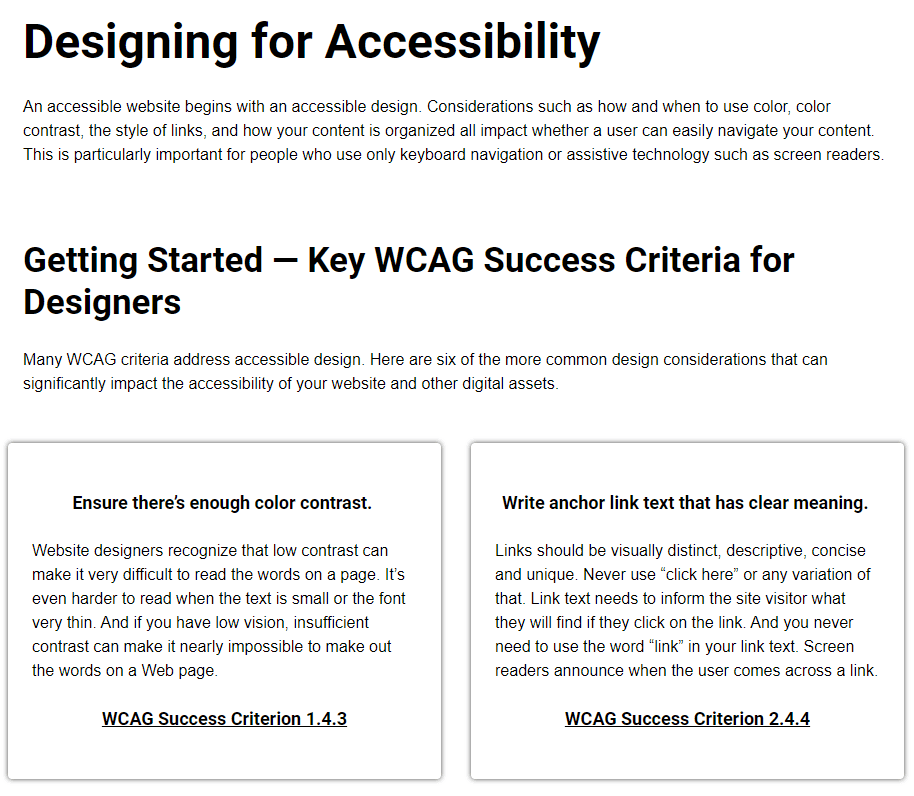
- Accessibility: Ensure your website is accessible to all users, including those with disabilities. Implement web accessibility standards, like using alt text for images, ensuring keyboard navigability, and providing captions for videos. If your organization has the budget we would suggest targeting WCAG AA but keep in mind requiring these checks increases the scope of the project in several ways. Design, Development, and Testing are required to achieve accessibiliy goals. Making accessibiltiy a hard requirement often means increasing your budget by 30% to cover the additional functionality and testing.
- Note that the markeplace is crowed with tools, plugins, and services claiming to correct websites for WCAG considerations. The vast majority of these “fixes” are nothing more than snakeoil.
- SEO Optimization: Employ advanced SEO techniques such as optimizing content with relevant keywords, using descriptive meta tags, and building a network of quality backlinks. Regularly updating your content also keeps your site fresh and more favorable to search engines. Consider investing in tools like Moz or SemRush to more fully understand what is happening with your association website content. Google and Bing both offer webmaster tools to help with your content indexing as well. Google Search Console is a must have for every association website.
Advanced SEO Strategies for Association Websites
SEO is crucial for increasing your website’s visibility. Conduct detailed keyword research to understand what your audience is searching for and optimize your content accordingly. Use analytics tools to measure your SEO performance and continuously refine your strategy. Local SEO is also important if your association operates regionally, so make sure to include location-specific keywords and register your site with local directories. We would recommend every association website consider what content types would benefit from Schema markup. Adding schemas to a content type is relatively simple and can have a huge impact on SEO and SERPs performance. Schemas and structure content are available for many content types including articles, news, events, locations, recipes and more. Plan on including the schema markups for as many of your content types as possible. The good news is that ChatGPT can help write schemas for associations.

Incorporating Effective Marketing Strategies
Effective marketing is key to driving traffic and engagement. Develop a robust email marketing strategy to keep your members informed and engaged. Utilize social media platforms to connect with your audience and share valuable content. Collaborations and partnerships can also extend your reach and bring new visitors to your site. Email is still a very effective method for member engagement but keep in mind that spamming members is not acceptable. If your organizations still refers to emails as “email blasts” you are doing it wrong. Emails should be highly customized, tailored, and personalized to unique member types, life events, and target marketing campaigns. There is no reason or excuse to bomb your entire mailing list in 2023. Do not do it. Email blasts in our experience as always in the top 10 “pain points” members experience with association websites.
Top Five Association Web Design Pain points
- Too many emails that are not personalized or targeted
- Ecommerce Transactions are too difficult
- Outdated communications workflows including faxes, PDFs, and print and mail forms
- Login and Account Recovery (“I can’t recover my password”, “I have duplicate accounts”)
- Site Search is too difficult (“I can’t find what I am looking for”)

Content Strategy and Development
A strong content strategy is vital. Develop a calendar to plan and publish diverse content types, including blog posts, white papers, videos, and infographics. Regularly updating your content keeps your audience engaged and helps with SEO. A good content strategy will always include not only a planning stage, but a content audits, content refreshment, and content retirement. Content should never be “Set it and forget it.” Monitoring content performance is a key part of maintaining a great association website.
Utilizing Multimedia and Interactive Features
Multimedia elements like videos, podcasts, and interactive tools can significantly enhance user engagement. Incorporate these elements in a way that adds value to your user’s experience. For example, create how-to videos, record podcast discussions on relevant topics, or develop interactive quizzes and surveys. In 2023 with the aid of a multitude of AI, MLs, and ChatGPTs, creating content for multichannel is easier than ever.
Maintenance and Continuous Improvement
A website is not a one-time project but an ongoing endeavor. Regularly update your site with fresh content, conduct security checks, and optimize content performance. Stay abreast of the latest web trends and technologies to keep your site current and effective. As we mentioned in a few areas, regularly monitoring your association websites performance is crucial. The web moves quickly, and you should plan on a minimum budget of 20 to 30% of your initial capital expenditure to keep things working at their best. Remember 20 to 30% minimum.
Association Website Redesign
In summary, crafting an engaging association website is a multifaceted process that blends aesthetic design with functional pragmatism, all centered around a deep understanding of your audience. By integrating these elements—user-centric design, consistent branding, accessible content, targeted SEO strategies, dynamic marketing, rich multimedia content, and continuous site maintenance—you can build a website that not only resonates with your audience but also stands out in the digital landscape. This guide serves as a roadmap to creating a website that not only meets but exceeds the user experience expectations of your members and visitors, ensuring your association’s online presence is as robust and impactful as its real-world influence.
Get Expert Association Website Design Help
Common questions about association website design
What makes association website design different from other website design?
Associations serve multiple audiences simultaneously — prospective members, current members at different lifecycle stages, board members, partners, the general public. A corporate website typically has one primary conversion goal. An association website has five or six, and they often conflict. The navigation, content hierarchy, and CTA strategy all have to account for that. Most web design firms that don’t specialize in associations underestimate this and build a site that works well for one audience and poorly for the rest.
What’s the most common mistake associations make when designing a website?
Organizing the site around the org chart. The sitemap ends up reflecting the association’s internal structure — membership department, events department, policy team — rather than reflecting how a member actually navigates their relationship with the association. Members don’t think in departments. They think in tasks: renew my membership, find the conference schedule, access the member directory. If the site doesn’t map to those tasks, members get lost.
How important is mobile optimization for an association website?
More than half of web traffic is mobile. For associations, the number varies by audience — a trade association serving contractors will skew heavier mobile than one serving academics. But the floor is high. If your event registration process or member portal is painful on a phone, you’re losing completions from members who aren’t going to switch to a desktop to finish. Responsive design is the baseline. Fast load times and touch-friendly interactions are the actual test.
How long should an association plan for a website redesign?
9–14 months for a mid-size association with an AMS integration. Associations that plan for six months usually spend months 7–12 in extended QA and scope negotiation. The phases that get cut when the schedule compresses are content strategy and member testing — which are the two phases most likely to prevent a bad launch. Budget the time before you start the RFP, not after you’ve signed the contract.
If you’re planning an association website project and want an independent read on your approach, see how Adtelic approaches association website design or get in touch.
More on association foundations
- Budgeting an Association Website Project
- User Research for Associations
- Mastering Stakeholder Engagement
Wondering where AI fits in your marketing operation? The AI Readiness Scorecard scores your operation on ten factors in about three minutes. It is free and it shows your result without asking for your email. If you want the version that examines your actual systems and workflow, that is the AI Readiness Audit: fixed fee, two to three weeks, a written plan you keep.
One Comment